
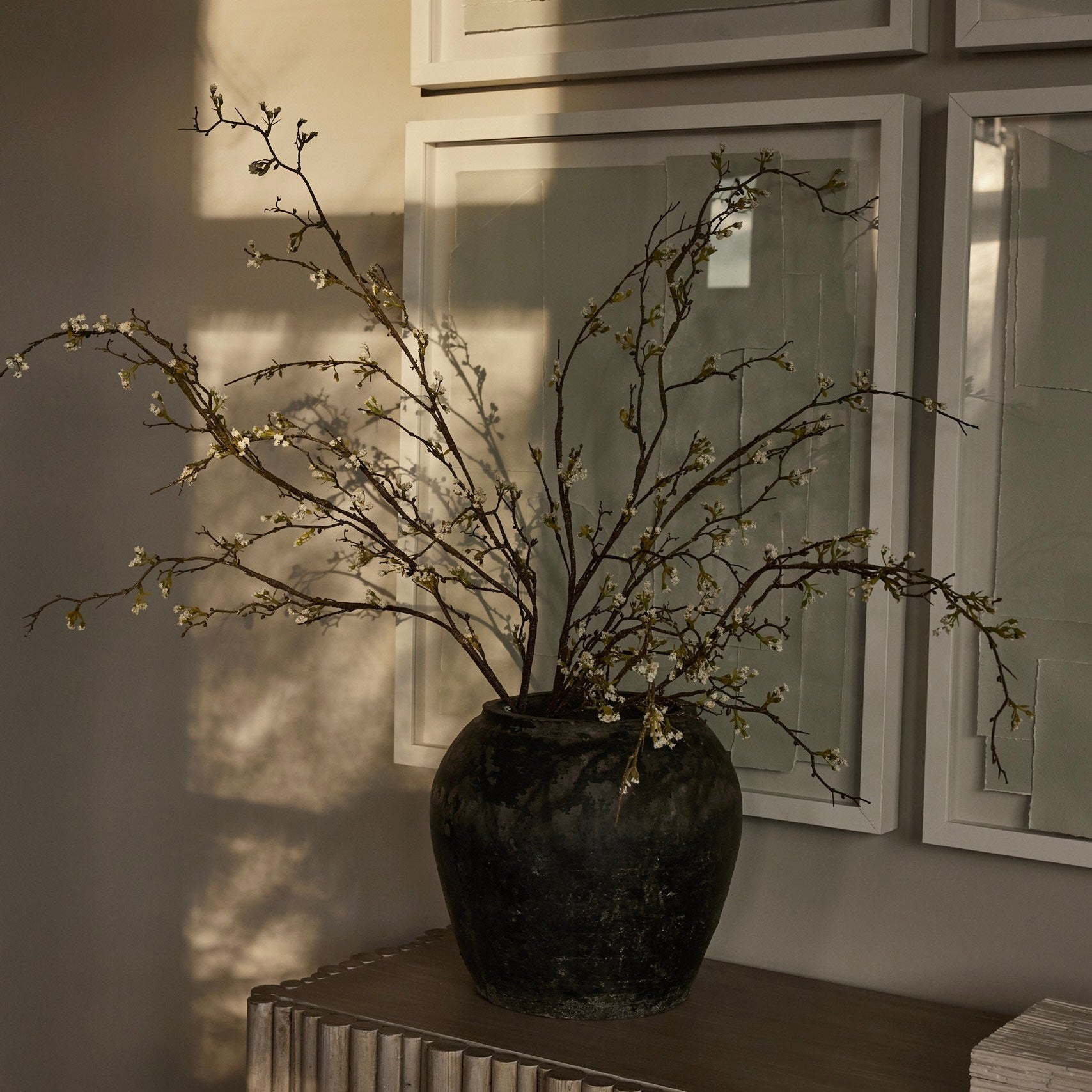
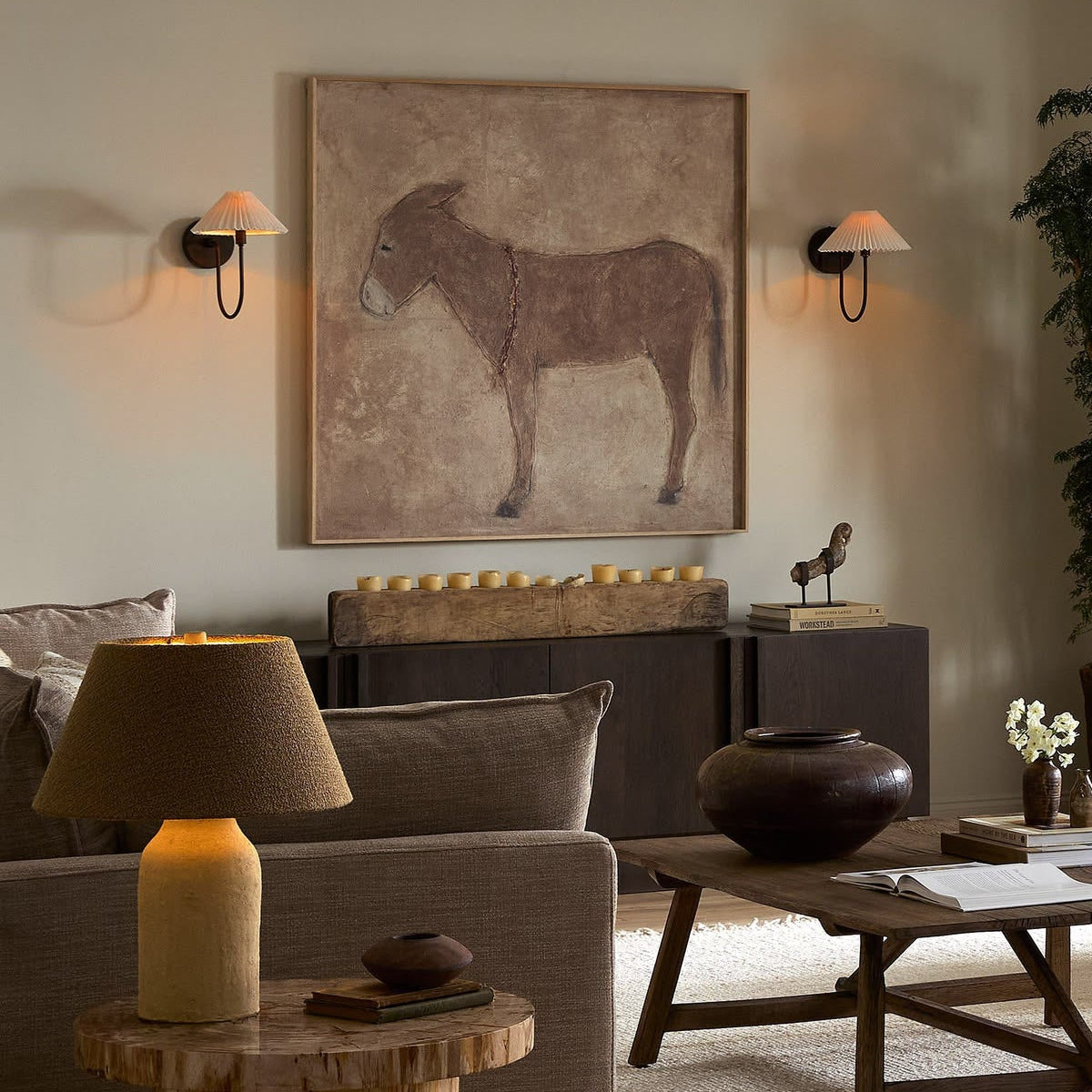

A mirror is often one of the last pieces selected for a room, but it's never an afterthought. The right mirror introduces balance, reflects light, and reinforces the architecture of a space. It can soften clean lines, add scale where it's needed, or become the focal point that quietly anchors the entire room.
Rather than choosing a mirror based solely on the wall it needs to fill, interior designers consider how it relates to the surrounding furniture, finishes, proportions, and natural light. A well-chosen mirror should feel integrated into the overall design, not simply hung because the space called for one.
Whether you're completing an entryway, layering a living room, or finishing a primary suite, here's how designers approach selecting the right mirror.
Start With Shape, Not Size
The silhouette of a mirror establishes its presence long before the frame or finish does. Choosing the right shape creates rhythm throughout a home and complements the architecture already in place.
Curved & Arch Mirrors
Curved mirrors introduce softness to spaces defined by clean lines and structured furniture. Their organic silhouette naturally offsets rectilinear millwork, fireplaces, and case goods while creating a more relaxed visual rhythm.
They're especially well suited above consoles, in entryways, and anywhere a room could benefit from a subtle architectural statement.
Explore our Curved & Arch Mirror Collection.

Square & Rectangle Mirrors
Rectangular mirrors remain a designer staple because of their versatility. Their clean geometry complements nearly every architectural style while bringing structure to softer interiors.
Whether placed above a fireplace, dining buffet, or bathroom vanity, these mirrors feel timeless rather than trend-driven.
Explore our Square & Rectangle Mirror Collection.

Round & Oval Mirrors
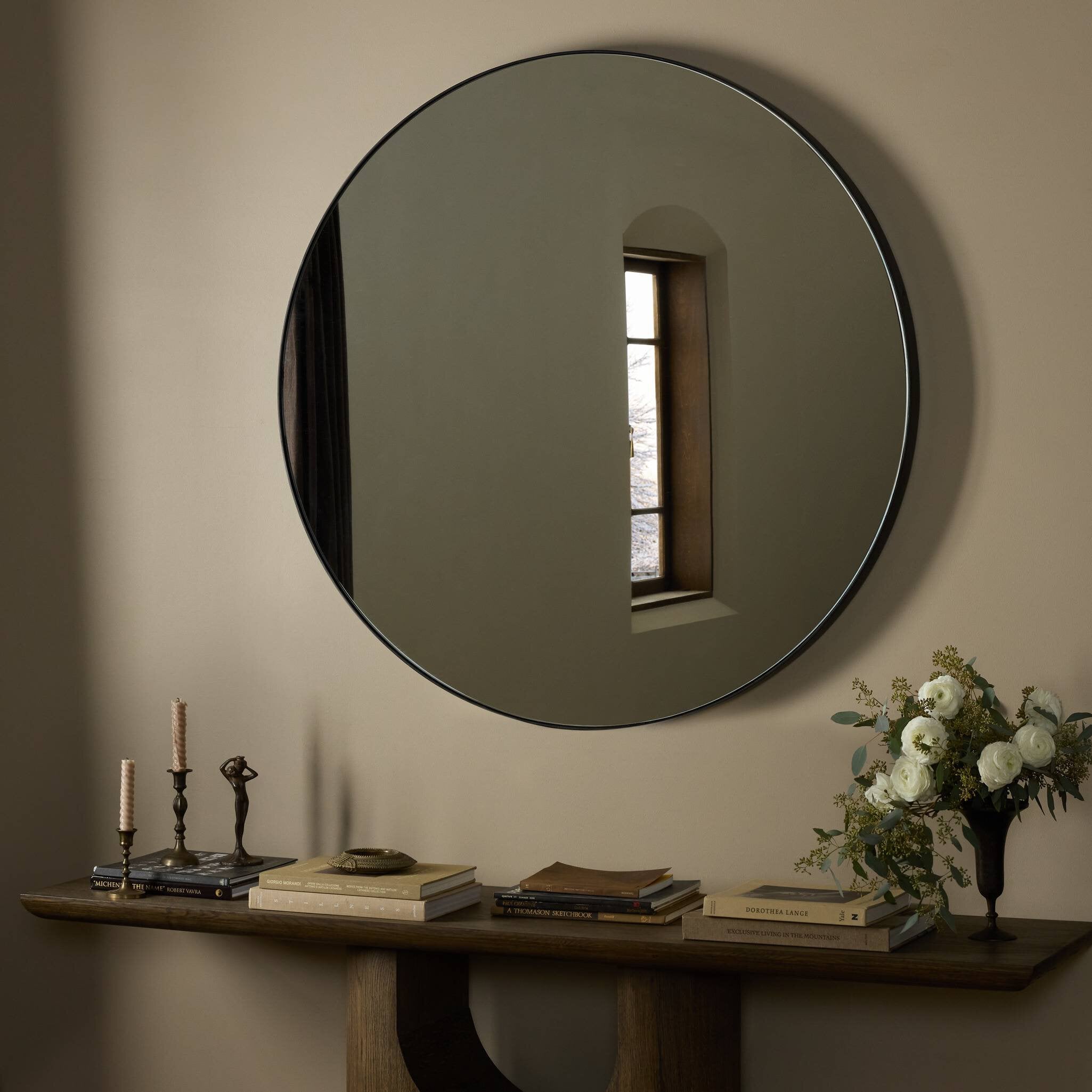
Round and oval mirrors create balance without feeling overly formal. Their versatility makes them a natural choice across a range of interiors, from layered transitional homes to contemporary spaces with sculptural furnishings.
Placed above a vanity, dresser, or console, these silhouettes introduce contrast while maintaining a sense of restraint.
Explore our Round & Oval Mirror Collection.

Full-Length & Floor Mirrors
Oversized floor mirrors offer more than functionality. They expand sightlines, reflect natural light, and introduce vertical scale without adding visual weight.
Rather than mounting every mirror, designers often lean full-length mirrors against a wall to create a more collected, lived-in aesthetic.
Explore our Full-Length & Floor Mirror Collection.

Scale Is Everything
One of the most common design mistakes isn't choosing the wrong mirror, it's choosing one that's too small.
A mirror should feel proportionate to the furniture and architecture around it. Above a console or fireplace, it should relate to the width of the piece beneath it rather than appearing to float independently on the wall.
When deciding between two sizes, designers almost always lean toward the larger option. A properly scaled mirror feels intentional and creates a stronger visual presence.

Consider What the Mirror Reflects
Every mirror becomes part of the composition of a room.
Before selecting its placement, designers consider what will appear in the reflection. Natural light, layered textures, artwork, and architectural details all become extensions of the design when reflected thoughtfully.
The goal is bigger than an empty wall: the right mirror improves the room from every angle.

Selecting the Right Mirror for Each Space
Entryway
An entryway mirror establishes the tone for the home while adding depth and light to one of the most frequently used spaces. Size it to the console beneath it: two-thirds to three-quarters of the console's width reads intentional, never wider. Hang it with the center 57 to 62 inches from the floor so reflections land at eye level.
Living Room
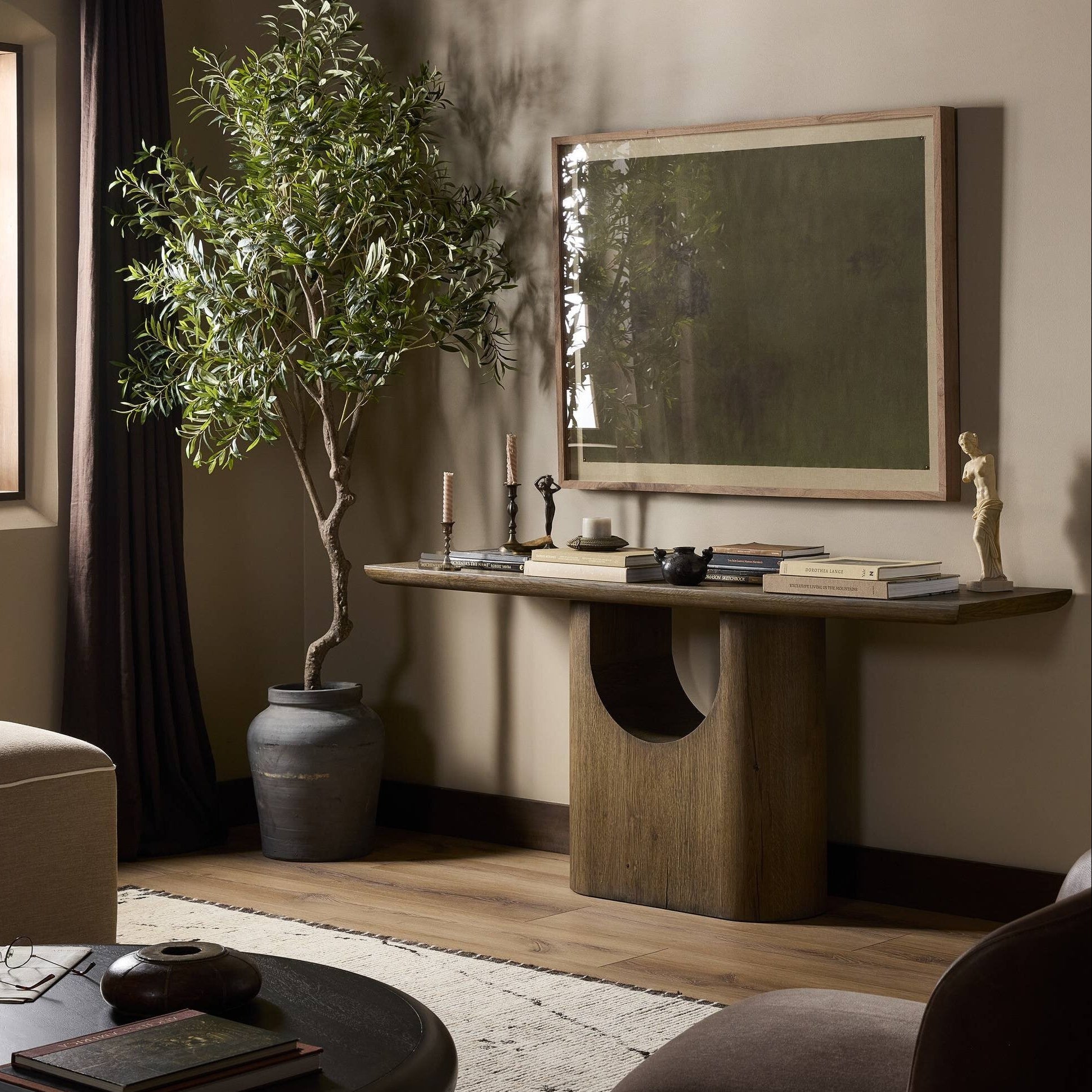
Mirrors are often positioned above fireplaces or consoles to reinforce the room's focal point and reflect natural light throughout the space. Keep the frame within two-thirds to three-quarters of the mantel or console width so it reads as part of the composition rather than an afterthought. Angle or position it to catch a window or light fixture in its reflection — a mirror that only reflects the ceiling or a blank wall wastes the placement.
Dining Room
Placed thoughtfully, a mirror can amplify architectural details and create a greater sense of openness without competing with surrounding furnishings. Position it opposite the table's longest sightline — over a buffet or sideboard, not directly behind seated guests — so it doubles the room's sense of depth rather than reflecting the backs of chairs. Leave at least a few inches of breathing room between the mirror's frame and any adjacent molding or art so it reads as a considered addition, not a crowded one.
Bedroom
Bedrooms call for mirrors that feel understated yet purposeful, whether that's an oversized floor mirror or a sculptural wall mirror layered above a dresser. If leaning a floor mirror, choose one roughly 65 to 72 inches tall so it holds its own next to a bed or dresser without needing to be mounted. Avoid hanging a mirror where it directly faces the bed from across the room, as reflecting the bed head-on is considered poor feng shui by many designers, and clients tend to notice it even if they can't say why.
Bathroom
The vanity mirror often defines the room. Shape, scale, and frame finish should complement the cabinetry and overall material palette rather than stand apart from it. Size it to sit a couple inches narrower than the vanity on each side, so the counter, sink, and mirror read as one cohesive unit instead of separate elements. Match the frame's metal tone to your fixtures, as mixing warm and cool finishes here is one of the fastest ways to make an otherwise well-designed bathroom feel unplanned.

Designer Perspective
A well-designed room isn't built around trends. It's built around proportion, balance, and thoughtful layering.
The same applies to mirrors.
Rather than asking what everyone else is hanging, consider which silhouette complements your home's architecture, enhances the surrounding furnishings, and contributes to the overall composition of the space. When those elements work together, the result feels timeless.